
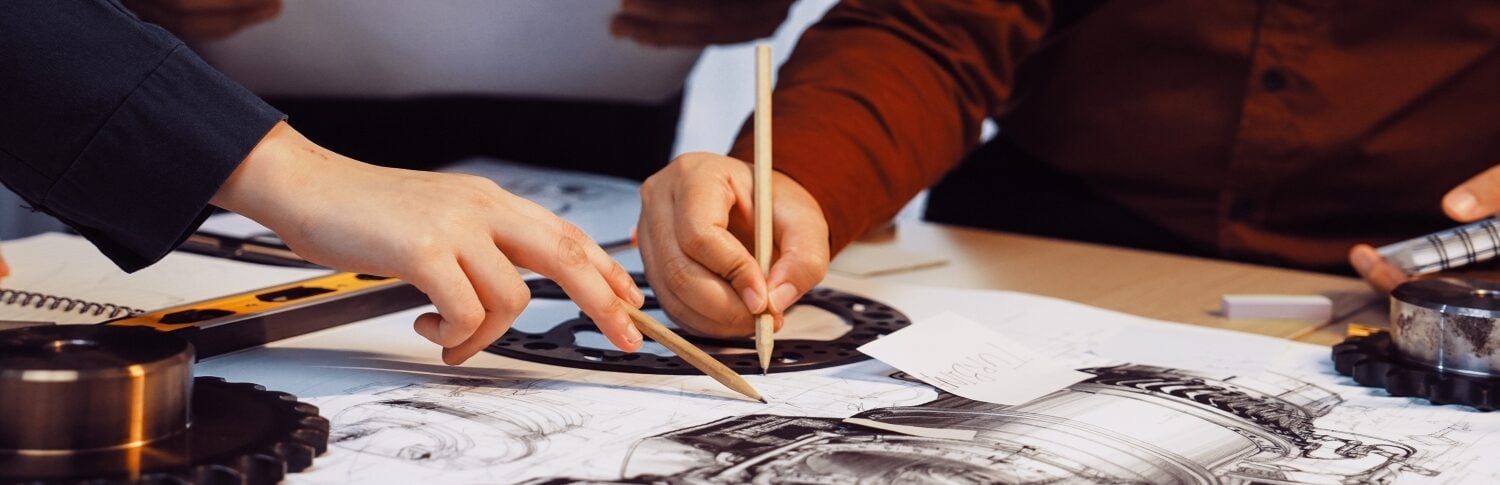
What is a patent/patent?
Have you invented something and want to protect it against being copied, sold, imported, or used commercially by third parties? Then you must apply for an invention patent, also known as a patent, which gives you sole rights to your invention. This applies even if someone else independently created the same invention.
You can only apply for patents on inventions. This is distinguished from other forms of intellectual property. A patent is always valid for one country or region. You can also apply for multiple countries within a region at the same time, for example within Europe. In this case, you can decide which countries you want protection for.
Three conditions for applying for a patent: novelty, inventiveness, and applicability
To obtain a patent, your invention must meet three conditions.
- Novelty
Your invention must be completely new. This sounds logical, but often causes problems. An invention must not have been publicly disclosed anywhere in the world, not even by yourself. Therefore, until you submit your application, you must keep your invention secret. - Creativity
The most important criterion is that your invention is inventive. It must be a resourceful concept that cannot easily be conceived by others. Therefore, an invention must not offer a readily available solution for patenting. - Industrial applicability
The third condition is that your invention must be industrially applicable. This means that your invention must be able to be produced, applied, and of course it must work.

“A good description of your invention is necessary to have a strong case in any legal proceedings regarding your patent.”
How do you apply for a patent?
To obtain a patent in the Netherlands, you must submit an application to the Dutch Patent Office. Your invention will then be assessed against the aforementioned three conditions. You can write your own patent application, but for complex inventions it can be difficult to formulate your application legally correctly. A good description of your invention is necessary to be strong in a possible lawsuit over your patent. The intellectual property lawyers at Schenkeveld Advocaten are happy to assist you with your patent application.
Your invention is only protected when you have submitted an application for a patent and it has been approved by the Dutch Patent Office or the European Patent Office. If someone else has independently created the same invention, the person whose application was approved first will obtain the patent.
How long is a patent valid for?
After the application, it usually takes 18 months before the patent is granted. A patent is then valid for a maximum of 20 years. When the 20-year validity period has expired, the patent expires. In practice, however, a patent rarely lasts that long. A patent holder must in fact pay maintenance costs annually. These increase each year. If the holder stops paying the costs, the patent expires.
Confidentiality
When a patent is granted, your invention becomes public knowledge. You are required to publish your invention. This may be a reason for you to refrain from applying for a patent. In addition, financial reasons can also prevent you from submitting an application. In that case, you can choose to remain anonymous. You can protect your invention under certain circumstances by enforcing confidentiality among your employees and partners. Schenkeveld Advocaten assists you in this and provides the confidentiality contracts.
Legal advice
You can also turn to Schenkeveld Advocaten for legal advice. For example, in your case is it wise to first apply for a patent only in the Netherlands? Or can you better protect your invention directly in multiple countries? Is confidentiality sufficient in your situation? Questions that our specialists have a clear answer to.
Infringement of a patent?
Has someone copied your invention for which you have a patent? In that case, there may be infringement. Also, the person who copies your invention may try to invalidate your patent. Furthermore, someone may (unlawfully) accuse you of infringement. Whatever your situation is, the intellectual property lawyers of Schenkeveld Advocaten are ready to assist you and will work hard to protect your interests.
Need legal advice right away or looking for answers? Ask your questions to one of our IE lawyers.
The most frequently asked questions
How does applying for a patent from A to Z work?
An patent application usually begins with research into the state of the art. Subsequently, an application is drafted and submitted. After that, an assessment of the invention and the formal requirements follows. Upon grant, you obtain an exclusive right to the invention for a certain period of time.
What is the difference between a patent, a utility model and an invention?
Patent and patent are different terms for the same right. In some countries, a utility model is a simpler and often faster form of protection for technical inventions. The Netherlands does not have its own utility model regulation.
What requirements must an invention meet in order to be patentable?
An invention must be new, inventive and industrially applicable. In addition, the invention must not have been publicly disclosed before the application is submitted.
How long does a patent procedure on average take?
The duration of a patent procedure varies by country and type of application. A Dutch patent can be granted relatively quickly, while European and international procedures often take several years to complete. Proper preparation can make the procedure run considerably more efficiently.
Related articles
-
Get the hang of it with the Article 96 Rv procedure!
Read full message: Hak samen de knoop door met de artikel 96 Rv-procedure!Primarily for parties that work together on a long-term basis and want to continue to work together, the Article 96 Rv procedure offers opportunities. This procedure gives parties the possibility to jointly present a dispute to an independent judge in an accessible manner. The parties act jointly, rather than being pitted against each other in the procedure. How…
-
Food prices 2027: statutory indexation increases by 4.1% as of 1 January
Read full message: Alimentatie 2027: wettelijke indexering stijgt met 4,1% per 1 januariDo you pay or receive alimony? Every year, alimony amounts (both child support and spousal support) are adjusted based on the statutory indexation. For 2027, the indexation has been set at 4.1%. Mandatory annual indexation The indexation applies to both alimony established by a court (for example, through a court judgment) and alimony agreed upon mutually. It is…
-
Municipality cannot attribute land sales to the desired buyer
Read full message: Gemeente mag grondverkoop niet toeschrijven naar gewenste koperIntroduction The municipality of Dronten wants to sell a plot of land of 9,000 m² for the expansion of the establishment of migrant workers, to the only serious bidder in its opinion. By selling the land, the municipality also meets another policy objective, namely reducing student housing in Dronten-Noord. The intended buyer owns seventeen student housing units. In exchange…